
An open-plan extension is one of the most effective ways to transform a traditional home into a modern, light-filled living space. By extending a home and removing internal walls, homeowners can create a seamless flow between kitchen, dining, and living areas.
For homeowners across Southampton, Eastleigh and Winchester, open-plan extensions are a popular choice for improving space, enhancing natural light, and creating a more flexible layout that suits modern living.
In this guide, we explore what open-plan extensions involve, the key benefits, common design approaches, and what to consider before starting your project.
What is an Open-Plan Extension?
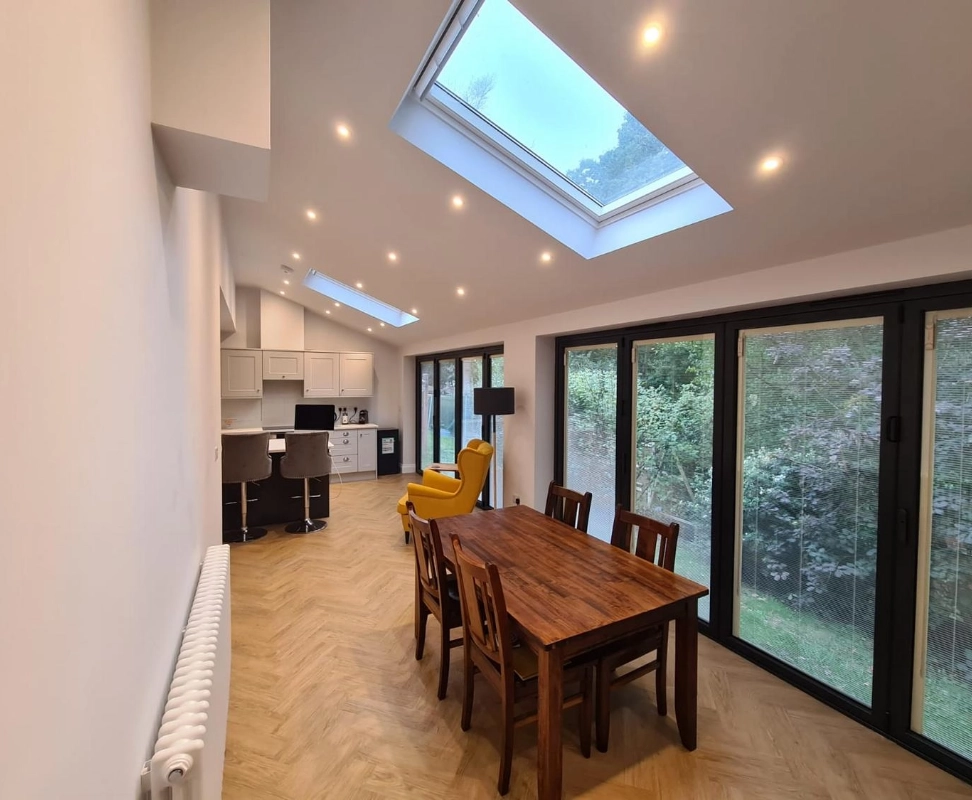
An open-plan extension typically involves extending a property and then removing internal walls to create a larger, interconnected living space. This often combines the kitchen, dining area, and lounge into one multifunctional environment.
Common types of open-plan extensions include:
- Rear extensions
- Side return extensions
- Wraparound extensions
These projects often involve structural alterations, including the installation of steel supports (RSJs) to safely replace load-bearing walls.
When designed and built correctly, an open-plan extension can completely change how a home feels and functions, making it far more suitable for modern family life.
The Benefits of Open-Plan Extensions
Open-plan extensions remain one of the most popular home improvements due to their practical and lifestyle advantages.
More Natural Light
Opening up the rear or side of a property and incorporating large glazing elements such as bi-fold or sliding doors allows natural light to flood the space.
Improved Family Living
Open layouts make it easier for families to spend time together, with cooking, dining, and relaxing all connected in one shared space.
Better for Entertaining
An open-plan design creates a sociable environment that flows naturally between indoor and outdoor areas, ideal for hosting guests.
Increased Property Value
A well-designed extension can significantly enhance the value of a home, particularly when it improves layout and usability.
Flexible Modern Living
Open-plan spaces can be adapted over time to suit changing needs, whether that’s a home office area, play space, or additional seating zone.
Popular Types of Open-Plan Extensions
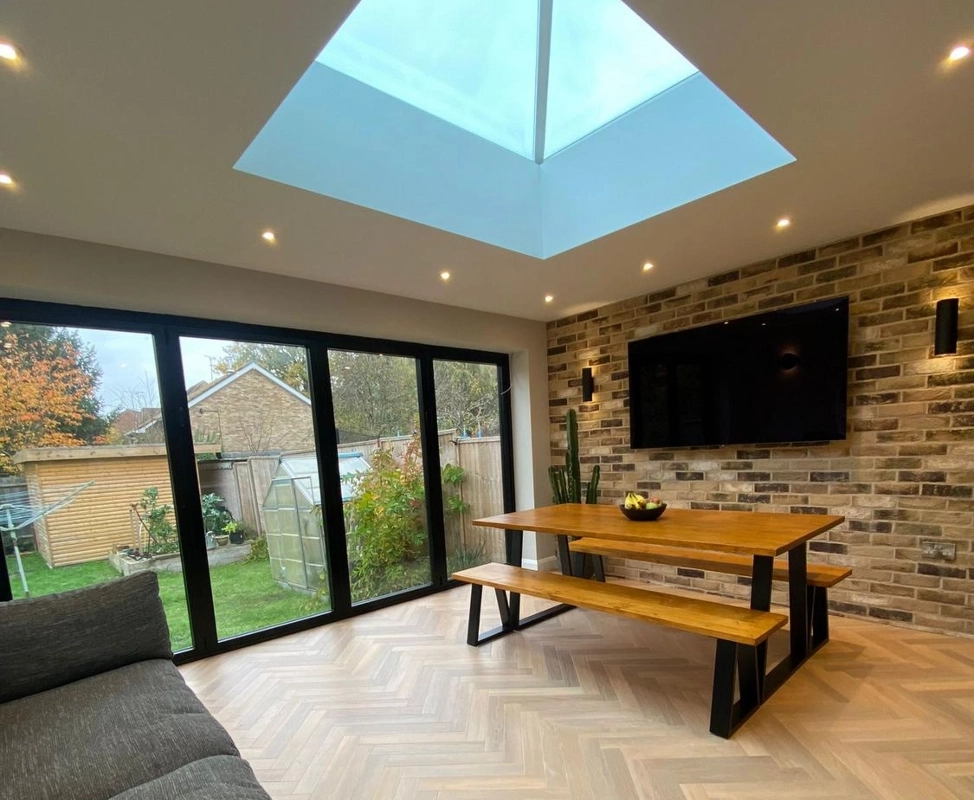
Different property layouts suit different types of extensions, depending on space and structure.
Rear Extensions
Rear extensions are one of the most common options, extending the home into the garden to create a larger kitchen-diner space with improved natural light and access outdoors.
Side Return Extensions
Side return extensions make use of narrow external space at the side of a property, often found in terraced or semi-detached homes, helping to widen the ground floor layout.
Wraparound Extensions
Wraparound designs combine rear and side extensions, creating a substantial increase in floor space and allowing for highly flexible open-plan layouts.
Designing Open-Plan Extensions Across Hampshire
Open-plan extensions can be successfully designed across a wide range of property types, from terraced and semi-detached homes to larger detached properties. The key is tailoring the layout and structure to suit the existing building, ensuring the finished space feels natural, functional, and well integrated.
Across areas such as Southampton, Eastleigh and Winchester, homeowners are increasingly choosing open-plan layouts to improve light, space, and overall flow within the home.
Planning Permission and Building Regulations
Some open-plan extensions fall under permitted development rights, meaning planning permission may not always be required. However, this depends on the size and scope of the project.
Regardless of planning requirements, all extensions must comply with building regulations, covering structural safety, insulation, drainage, ventilation, and fire safety.
Key considerations include:
- Structural steel installation (RSJs)
- Party wall agreements (where applicable)
- Drainage and utility adjustments
- Compliance with current building standards
Working with experienced professionals such as High Grade Projects ensures all regulatory requirements are managed correctly from the outset.
Design Tips for a Successful Open-Plan Extension
A successful open-plan extension is about more than just removing walls — it requires thoughtful design and planning.
Define Functional Zones
Use lighting, furniture placement, or subtle flooring changes to separate kitchen, dining, and living areas within one open space.
Maximise Natural Light
Incorporating large windows, roof lights, or glazed doors helps create a bright and welcoming environment.
Plan the Flow of Space
A well-considered layout ensures easy movement throughout the space without awkward transitions orblocked walkways.
Use Consistent Materials
Consistent flooring and finishes help maintain visual continuity and make the space feel larger.
Layer Your Lighting
Combine ambient, task, and feature lighting to ensure the space works well throughout the day and evening.
Why Choose a Professional Builder?
Open-plan extensions require careful planning, structural expertise, and precise execution. Choosing an experienced contractor helps ensure the project is delivered safely, efficiently, and to a high standard.
From initial design discussions through to completion, professional builders help avoid common issues such as poor layout planning, structural complications, and compliance problems.
Conclusion
An open-plan extension is one of the most effective ways to modernise and enhance a home, creating a brighter, more spacious, and more flexible living environment.
Whether you are based in Southampton, Eastleigh or Winchester, an open-plan layout can transform how you use your home and significantly improve day-to-day living.
If you’re considering an extension, working with experienced professionals like High Grade Projects ensures your project is delivered with care, precision, and attention to detail. Get in Touch
Frequently Asked Questions
Do I need planning permission for an open-plan extension?
Many open-plan extensions fall under permitted development rights, meaning planning permission may not always be required. However, this depends on the size, design, and location of the project. Building regulations approval is always required.
How long does an open-plan extension take to build?
Most open-plan extensions take around 8–16 weeks once construction begins, depending on the complexity and size of the project.
Will an open-plan extension add value to my home?
Yes — a well-designed open-plan extension can significantly increase property value by improving space, layout, and natural light.
Can I build up to a neighbouring boundary?
In many cases, yes, but it depends on planning and building regulations. Factors such as fire safety, drainage, and boundary positioning will all need to be considered as part of the design.
What if there is a tree in the way (big or small)?
Trees can affect how an extension is designed, especially if they are protected or have large root systems. A survey will determine whether the tree can remain or if adjustments are needed.
Would an existing extension or conservatory cause issues?
Not necessarily. Existing structures are assessed as part of the design process and may be incorporated, adapted, or removed depending on their condition and compliance with current standards.
What access would you need to the building plot?
Ideally, access is needed for small machinery and material deliveries. If rear access isn’t available, alternative methods can usually be arranged during the build planning stage.
Can I convert my existing layout into open-plan?
In many cases, yes. Internal walls can often be removed or altered, but structural support (such as steel beams) may be required to ensure safety.
What is the most popular type of open-plan extension?
Rear extensions are the most common, especially for creating kitchen-dining-living spaces that open onto the garden.